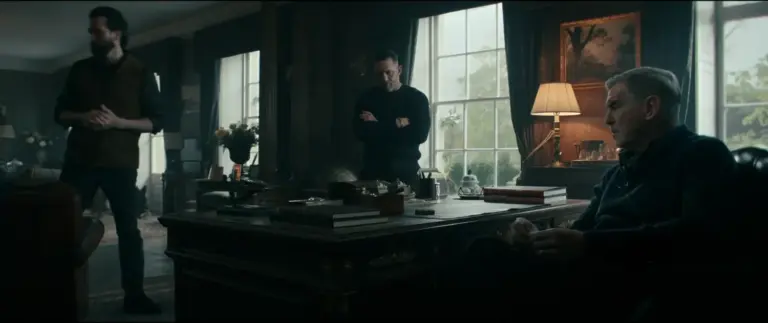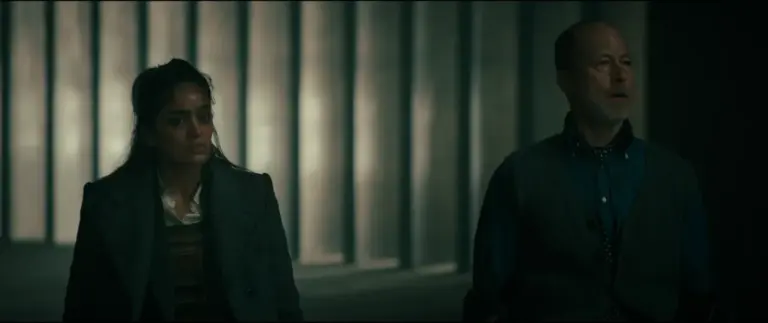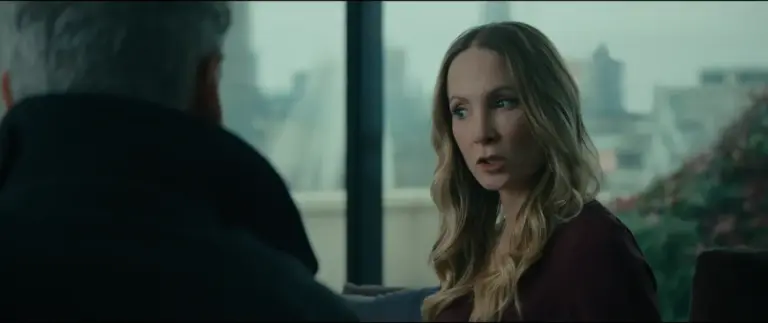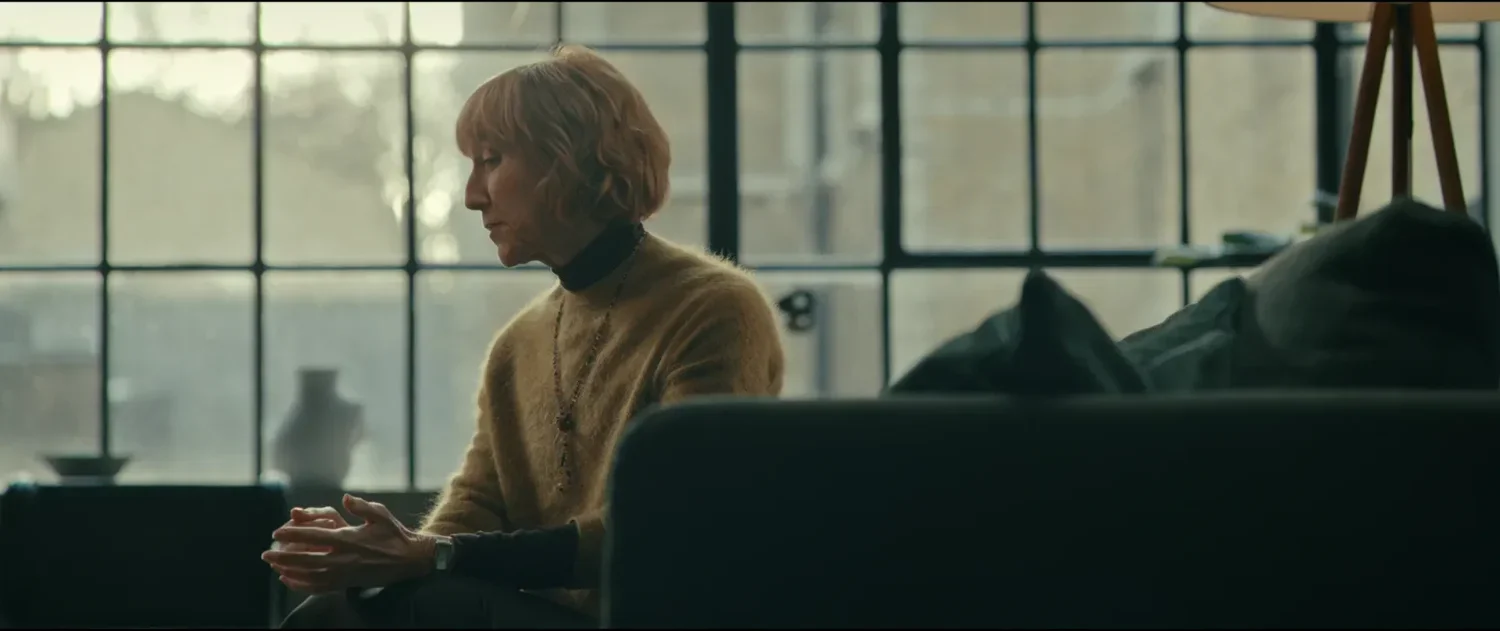
MobLand Season 1 Finale Breakdown: “The Beast in Me” Ends the War—and Opens a New One
The last chapter of MobLand Season 1 arrives like so many of the show’s key moments: quickly, decisively, and with consequences that ripple outward before anyone can fully catch their breath. After nine weeks of escalating pressure—family dinners turning into crime scenes, loyalties collapsing under interrogation, and secrets surfacing at the worst possible time—Paramount+ brings the season to a close with Episode 10, “The Beast in Me,” released June 1, 2025. According to Paramount+, the finale runs 54 minutes and comes with an unusually blunt logline that almost dares viewers to keep up: “Kevin takes care of a problem. Maeve spills the tea. Season finale.” (Paramount+)
But the neatness of that description is part of the trick. “The Beast in Me” isn’t neat at all. It’s a finale built around implosion—of alliances, of cover stories, of the thin domestic boundaries the Harrigans have been pretending still exist.
Before we get into the decisive swings of Episode 10, it helps to anchor where and when this finale lands in the bigger rollout. MobLand Season 1 ran 10 episodes total, premiering March 30, 2025, and wrapping June 1, 2025, with weekly releases on Paramount+. (<a href="https://www.paramountplus.com/shows/mobland/?utmsource=openai”>Paramount+) Newsweek reported the finale became available to stream at 12:00 a.m. PT / 3:00 a.m. ET on June 1. (<a href="https://www.newsweek.com/entertainment/tv/mobland-episode-10-release-date-schedule-how-watch-2076317?utmsource=openai”>Newsweek)
That schedule matters because MobLand wasn’t a quiet weekly drop. Paramount+ and major outlets repeatedly framed the series as a breakout. TVLine reported the premiere drew 2.2 million global viewers on premiere day, which it described as the streamer’s largest global series launch ever. (TVLine) A subsequent Paramount ANZ press-release republication cited 8.8 million global viewers in the show’s first seven days, and described that as a major jump from premiere day (reported as +298%). (PressParty / Paramount ANZ)
So when “The Beast in Me” lands, it’s not just wrapping a story. It’s closing the first season of one of Paramount+’s most aggressively positioned weekly dramas of 2025—one that would be renewed shortly after.
The Setup: Episode 9’s Dinner from Hell (and Why the Finale Starts in a Cage)
To understand why Episode 10 begins with so much of the chessboard already overturned, you need Episode 9: “Beggars Banquet.” Entertainment Weekly’s recap lays out the two detonations that make the finale possible.
First, it reveals a major family truth: Conrad is Eddie’s biological father. (<a href="https://ew.com/mobland-season-1-episode-9-recap-eddie-parentage-maeve-rat-11741637?utmsource=openai”>Entertainment Weekly) Second, it turns the Harrigans’ attempt at unity into a legal disaster: police arrive at the family dinner, and Conrad and Maeve are arrested. (EW recaps the arrest as the moment the family’s power temporarily shifts out of the home and into the system.) (<a href="https://ew.com/mobland-season-1-episode-9-recap-eddie-parentage-maeve-rat-11741637?utmsource=openai”>Entertainment Weekly)
Episode 9 also pushes Kevin into a darker corner that the finale then exploits. According to EW’s recap, Kevin confronts and kills a past abuser, Rusby—a brutal, personal act that’s less about mob politics and more about buried trauma rupturing the surface. (Entertainment Weekly)
With those pieces in place—biological truth revealed, leadership locked up, and Kevin already primed for violence—Episode 10 doesn’t waste time “building.” It simply moves.
Core Credits and the Shape of the Finale
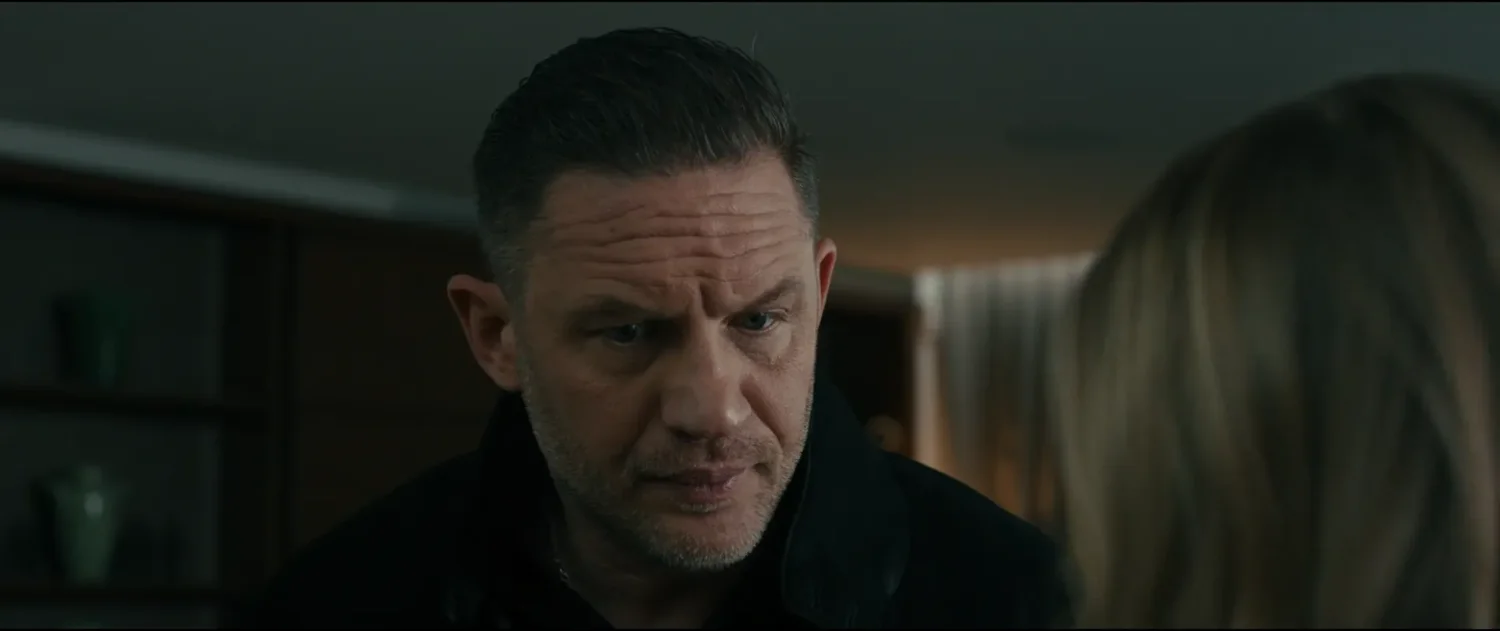
On paper, “The Beast in Me” is straightforwardly authored. IMDb credits Anthony Byrne as director and Ronan Bennett and Jez Butterworth as writers. (IMDb) But the way the episode is presented—especially in how it escalates from family betrayal to open execution—feels deliberately compressed, as if the show is collapsing multiple endgames into one hour.
Paramount+ lists the finale runtime at 54 minutes, while IMDb lists 55 minutes, a small discrepancy but worth noting if you’re tracking exact episode length across platforms. (<a href="https://www.paramountplus.com/shows/video/5lIOS5X9cKMKZcfSQZ1wiDNxfLzgjVLn/?utmsource=openai”>Paramount+; <a href="https://www.imdb.com/title/tt32125932/?utmsource=openai”>IMDb)
Even the official logline is built to highlight the finale’s “three-lane” structure: Kevin’s problem, Maeve’s revelations, and then the overarching finality of a season-ending event. (<a href="https://www.paramountplus.com/shows/video/5lIOS5X9cKMKZcfSQZ1wiDNxfLzgjVLn/?utmsource=openai”>Paramount+) IMDb’s summary adds more texture—mentioning Tattersall, Richie preparing for war, Seraphina’s meet-and-greet, and Jan getting Harry’s attention—though it stays at the “tease” level rather than spelling out beats. (<a href="https://www.imdb.com/title/tt32125932/?utmsource=openai”>IMDb)
Maeve and Conrad Behind Bars: Power Doesn’t Stop at Prison Doors
Entertainment Weekly’s finale recap opens with the key reality: Maeve and Conrad are in prison, even as the “war” reaches its endgame outside. (Entertainment Weekly)
This matters because the show doesn’t treat imprisonment as a pause button. Instead, the finale treats prison as a new command center—one where information is still weaponized and orders can still travel.
EW reports that Maeve tells Eddie he must kill Harry and Seraphina. (Entertainment Weekly) Whether you interpret that as desperation, paranoia, or cold strategic thinking, the fact remains: Maeve is still issuing fatal directives from behind bars, and Eddie is still positioned as someone who might follow them.
That single instruction also frames the emotional and strategic stakes of the episode. If Maeve is willing to target Harry—Harrigan fixer, problem-solver, and key stabilizer—then the family’s internal collapse has officially caught up to its external conflict.
Eddie Spirals: The Reveal Turns into Violence
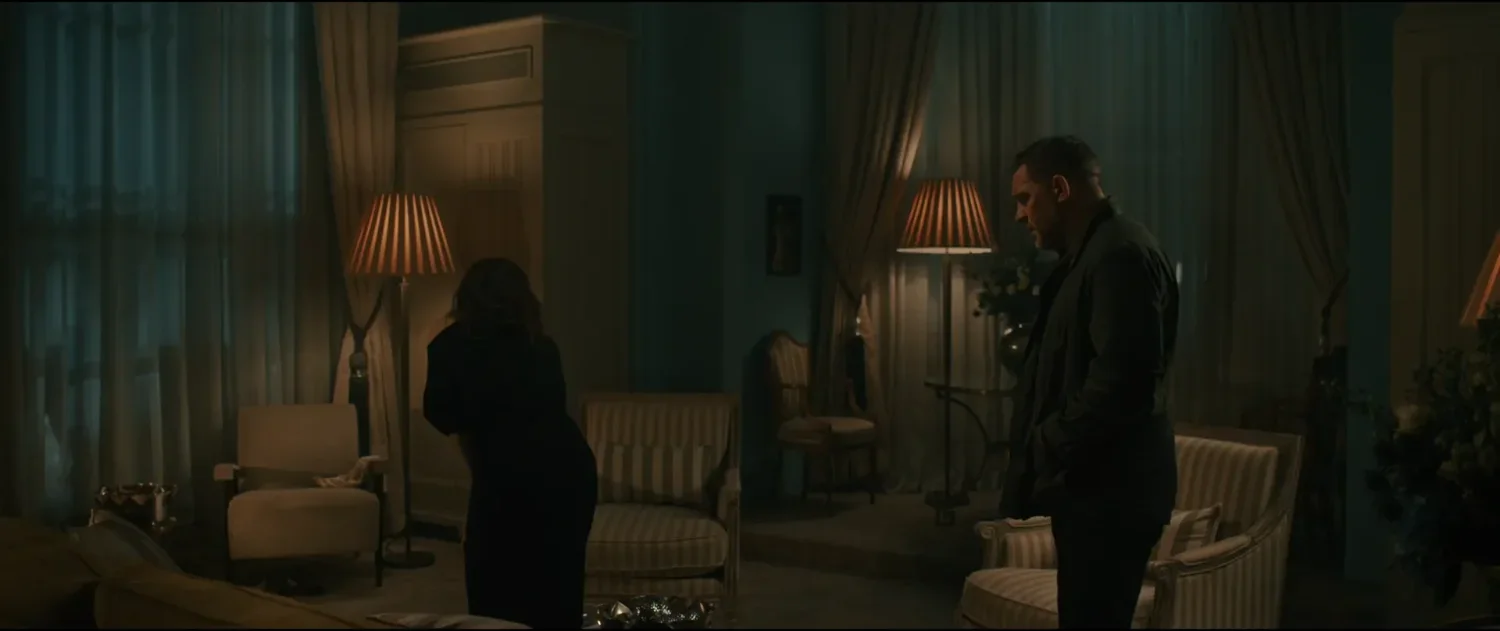
Then comes one of the most physically alarming “family” scenes of the finale. EW’s recap states that Eddie attacks Bella after learning Conrad is his father; he chokes her and is stopped before he kills her. (Entertainment Weekly)
This is not framed as a “mob hit” or a tactical move. It’s a breakdown—personal, chaotic, and intimate in the ugliest sense. In a season where secrets are currency, Eddie’s parentage is the kind of revelation that doesn’t just rearrange who sits at which chair. It rearranges who feels entitled to power, who feels humiliated, and who lashes out when the story they believed about themselves collapses.
If you’re breaking down “The Beast in Me” as a finale, this is one of the clearest examples of how MobLand links macro-level underworld warfare to micro-level domestic horror: the war isn’t only happening in cars and warehouses and backrooms. It’s happening in living spaces, around family members, with hands around throats.
The Mole Exposed: O’Hara Identified as the Rat
A war like the Harrigan–Stevenson conflict can’t reach a conclusion without revealing what’s been leaking information. EW’s finale recap identifies a crucial turning point: the Harrigans’ mole is exposed, and it is O’Hara. (Entertainment Weekly)
This reveal is the kind of late-season “locking mechanism” crime dramas use to snap the plot into place. Once the mole is named, the earlier chaos becomes legible. You may not suddenly agree with every decision a character made, but you can trace the line of betrayal through the season and understand why certain plans failed.
And the finale doesn’t leave the revelation hanging.
EW reports that Harry kills O’Hara. (Entertainment Weekly) That one act does two things at once: it ends the immediate information leak, and it further defines Harry as the show’s ultimate executor of consequence. In MobLand, Harry doesn’t just clean up messes—he seals them shut.
“Kevin Takes Care of a Problem”: Richie Stevenson Is Killed
The Paramount+ logline’s first sentence—“Kevin takes care of a problem”—lands with brutal clarity in EW’s account of the climax. According to EW’s finale recap, Kevin kills Richie Stevenson. (Entertainment Weekly)
This is, structurally, the season’s “war-ending” action. Richie Stevenson’s death marks a decisive shift in the Harrigan–Stevenson conflict that’s been driving the season.
It also reframes Kevin’s arc through the lens established in Episode 9. If Kevin has already been pushed into violence rooted in personal trauma—EW’s recap of Episode 9 names Rusby as the abuser Kevin killed—then the finale positions Kevin as both a man resolving internal demons and a man acting as a decisive weapon in external war. (Entertainment Weekly)
In other words: Kevin’s “problem” is never only Richie. Kevin’s “problem” is the kind of damage that turns him into someone capable of killing Richie.
The Kitchen Turn: Jan Stabs Harry—Accidentally
Just when the finale seems to be tying up its open ends—war concluded, mole eliminated—it pivots into a last-minute domestic catastrophe.
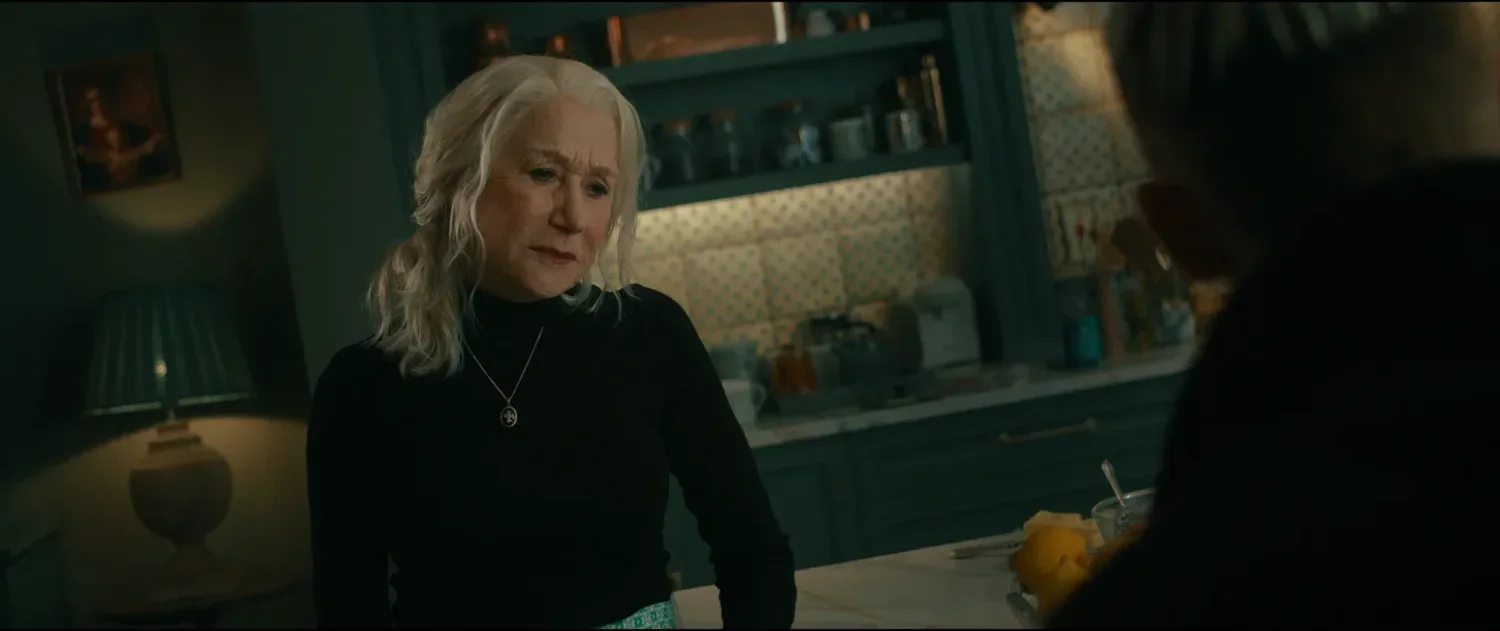
Entertainment Weekly’s recap states that Jan accidentally stabs Harry in the chest in a kitchen scene, and that Harry remains conscious. (Entertainment Weekly)
Collider’s ending explainer echoes the same key fact: Jan stabs Harry by accident, and in the immediate aftermath Harry is described as “okay” in the moment. (Collider)
This is the kind of finale beat that functions like a trapdoor. The story has just “ended”—and then it immediately insists it hasn’t. The fixer, the stabilizer, the man who just eliminated the rat, is suddenly bleeding on a kitchen floor.
And because EW explicitly frames it as accidental, the meaning shifts. This isn’t a calculated betrayal like O’Hara’s. It’s messy, human, chaotic—an injury born out of panic, proximity, and misunderstanding. It also complicates any clean victory lap. Even with Richie dead and the mole eliminated, the Harrigans don’t get to exhale.
The Last Image: Prison Applause and “Sympathy for the Devil”
The finale ends not on the killing of Richie or the death of the rat, but on an image that’s both celebratory and ominous: Conrad receives applause from prisoners while The Rolling Stones’ “Sympathy for the Devil” plays. (This is described in EW’s recap.) (Entertainment Weekly)
Here, the finale’s style leans into something more overtly cinematic—an “ending button” designed to linger.
Pierce Brosnan addressed this sequence in an interview cited by CBR, describing it as a kind of homage to The Italian Job, specifically its prison-applause moment. CBR also reported Brosnan said they shot the prison sequence at Reading Gaol, a historic prison associated with Oscar Wilde. (CBR)
That last detail—Reading Gaol—gives the moment a real-world anchor. It’s not just “a prison set.” It’s a specific location with a cultural afterlife. And if you’re writing a finale breakdown, it’s one of the best verified production details available for scene-setting because it is both concrete and sourced.
CBR also reported Brosnan said he suggested using “Sympathy for the Devil” for that moment, describing the idea of cranking it out at the end. (CBR)
So the finale’s last image is not a random needle drop. It’s an ending crafted with a deliberate musical and cinematic reference point—one the actor himself has publicly discussed.
Why This Finale Matters Beyond the Plot: The Numbers and the Renewal
The reason “The Beast in Me” carries extra weight is that it wasn’t landing into uncertainty. By late June 2025, MobLand was not only a weekly hit—it was officially a continuing franchise for Paramount+.
TVLine reported Paramount executive Chris McCarthy said the show had drawn “more than 26 million viewers and climbing” and called it “a resounding triumph,” while announcing the streamer was “elated” to greenlight Season 2. (TVLine)
Variety’s renewal coverage adds important context to that “26 million” claim: it reports Paramount defined the figure as total global watch time divided by total run time over the show’s first 70 days. (Variety ANZ)
Variety also reported Paramount’s claim that MobLand is the streamer’s #2 original of all time, behind Landman, and that it spent six weeks on the Nielsen Top 10 Original Series chart (with the most recent week cited as May 19–May 25). (Variety ANZ)
Those numbers don’t change what happens in the finale—but they do change how you read it. A finale that might otherwise feel like a definitive end instead plays like a hinge: wrapping the immediate war while ensuring there’s enough damage left to justify a second season.
Where the Finale Leaves the Story (Without Guessing Past the Facts)
Sticking strictly to what the sourced recaps confirm, the finale leaves MobLand in a state of messy “resolution”:
- Maeve and Conrad are in prison during the finale’s key movements. (Entertainment Weekly)
- Maeve pushes Eddie toward further violence, telling him he must kill Harry and Seraphina. (Entertainment Weekly)
- Eddie attacks Bella, choking her, and is stopped short of killing her. (Entertainment Weekly)
- The mole (O’Hara) is exposed and killed by Harry. (Entertainment Weekly)
- Richie Stevenson is killed by Kevin, ending the central “war” thread as described in EW’s recap. (Entertainment Weekly)
- Jan accidentally stabs Harry in the chest, and Harry remains conscious in the immediate aftermath. (<a href="https://ew.com/mobland-finale-recap-episode-10-death-decides-winner-harrigan-stevenson-war-11746086?utmsource=openai”>Entertainment Weekly; <a href="https://collider.com/mobland-season-1-ending-explained/?utmsource=openai”>Collider)
- The episode closes on Conrad’s prison applause paired with “Sympathy for the Devil,” a moment Brosnan later connected to an Italian Job homage and said was shot at Reading Gaol. (<a href="https://ew.com/mobland-finale-recap-episode-10-death-decides-winner-harrigan-stevenson-war-11746086?utmsource=openai”>Entertainment Weekly; <a href="https://www.cbr.com/mobland-pierce-brosnan-the-italian-job-homage/?utmsource=openai”>CBR)
In other words: the Stevenson conflict reaches a lethal conclusion, but the Harrigans’ internal fractures widen—especially with Harry injured, Eddie volatile, and Maeve still exerting influence even from a cell.
The Release Context: How Viewers Watched, and What It Cost
For readers who like practical viewing context alongside story breakdowns, Newsweek’s “how to watch” reporting around the finale included Paramount+ pricing at the time: $7.99/month or $59/year for Paramount+ Essential, and $12.99/month or $119.99/year for Paramount+ with Showtime. (Newsweek)
That’s not just consumer info—it’s part of the show’s real-world footprint. MobLand didn’t “air” in the traditional sense; it arrived at a specific streaming hour, behind a specific paywall, and then became a performance case study cited in renewals coverage.
One Last Thing: The Finale Is Also an Industry Statement
Finally, it’s notable that Paramount+ positioned MobLand not only as a ratings success but as an awards contender. Variety reported Paramount+ planned Emmy submissions that included Tom Hardy and Pierce Brosnan for Lead Drama Actor, and Helen Mirren for Supporting Drama Actress. (Variety ANZ)
Variety also reported the series’ writing submission episode would be Episode 105, “Funeral for a Friend” (credited to Bennett and Butterworth), and directing submissions included Guy Ritchie for Episode 102 “Jigsaw Puzzle,” Anthony Byrne for Episode 109 “Beggars Banquet,” and Daniel Syrkin for Episode 105 “Funeral for a Friend.” (Variety ANZ)
Even though “The Beast in Me” is the finale, those submissions underscore a larger point: Paramount+ framed MobLand as prestige drama as much as popcorn crime thriller. That’s part of why the finale’s final image—applause in a real historic jail, set to an iconic Stones track—feels engineered to stick in memory.
And it does. Not because it “wraps everything up,” but because it makes the victory feel unsettling, conditional, and expensive—exactly the kind of ending that can support another season.
Sources Used (key)
- Paramount+ episode guide and Episode 10 page:
https://www.paramountplus.com/shows/mobland/?utm_source=openai https://www.paramountplus.com/shows/video/5lIOS5X9cKMKZcfSQZ1wiDNxfLzgjVLn/?utm_source=openai
- IMDb credits for S1E10: https://www.imdb.com/title/tt32125932/?utm_source=openai
- Entertainment Weekly Episode 9 recap: https://ew.com/mobland-season-1-episode-9-recap-eddie-parentage-maeve-rat-11741637?utm_source=openai
- Entertainment Weekly finale recap: https://ew.com/mobland-finale-recap-episode-10-death-decides-winner-harrigan-stevenson-war-11746086?utm_source=openai
- Collider ending explainer: https://collider.com/mobland-season-1-ending-explained/?utm_source=openai
- CBR on Brosnan/Italian Job homage + Reading Gaol: https://www.cbr.com/mobland-pierce-brosnan-the-italian-job-homage/?utm_source=openai
- TVLine ratings + renewal:
https://www.tvline.com/ratings/mobland-viewers-record-paramount-plus-1235428757/ https://www.tvline.com/news/mobland-renewed-season-2-paramount-1235438624/?utm_source=openai
- Variety renewal + viewership definition: https://au.variety.com/2025/tv/global/mobland-renewed-season-2-paramount-plus-24099/?utm_source=openai
- Variety Emmy campaign info: https://au.variety.com/2025/tv/global/mobland-paramount-emmys-campaign-tom-hardy-pierce-brosnan-22942/?utm_source=openai
- Newsweek release time + Paramount+ pricing: https://www.newsweek.com/entertainment/tv/mobland-episode-10-release-date-schedule-how-watch-2076317?utm_source=openai